Ask yourself: on average, how many hours a day do you spend on social media? According to the American Psychological Association (2024), the number for the average teenager in the U.S is nearly 5 hours. After an entire year, that would equate to 76 full days being dedicated solely to consuming social media content.
For something so present in most teens' everyday lives, few beg to question whether their lowered self-esteem, poorer sleep schedules, and worsened mental health may have been caused by something much more closer than they think.
The purpose of this article is not to condemn the use of social media, but to instead discuss the ways it has unfortunately amplified the mental health issues that we see among adolescents today. Deciding to completely isolate yourself from social media is unnecessarily restricting, but using it without being aware of the risks is like playing with fire. So what's the solution? How can we still coexist with social media while avoiding its harm?
It starts with understanding how these toxic feelings are stirred up in the first place.
The Comparison Effect
When you post something on social media, chances are that you are not uploading the spontaneous pictures of your day. With hundreds if not thousands of eyes now viewing and judging what you share, appearing in a way that you think would impress others feels essential. Because of this trend, the majority of highlights that we now see posted by others are most likely taken with the perfect lighting, angle, or filter to look better or different than real life.
But let me be clear: wanting to make yourself look good on social media is not wrong. The issue, however, arises when someone starts to live their life to show it rather than enjoy it.
When someone measures themselves against unrealistic standards, they are setting themselves up to feel inadequate from the start. Suddenly, they find themselves spending more time, energy, and effort on crafting the ideal digital persona. What first started as simply wanting to appear good online has now turned into something much more harmful and consuming, and the data supports it.
Research conducted by the Cybersmile Foundation (2023) found that 93% of Gen Z users experienced pressure to compare themselves online across multiple areas of life, with 77% pointing to social media as the culprit. And it's easy to see why: repeated exposure to the glamorous and thrilling highlights of their peers can make teenagers feel dissatisfied with their own lives. Consequently, more and more young people feel pressured to capture the most aesthetically pleasing photos from every exciting place or hangout they experience.
Despite the fact that these events happened regardless of whether others knew about them, it seems for many teenagers that not sharing their life is equivalent to being seen as having a boring and ordinary one.
Self-Esteem
According to the National Institute of Health (NIH), self-esteem refers to “the feelings of love, respect, and trust that a person feels toward oneself as a result of knowing oneself and evaluating oneself realistically” (Colak et al., 2023, p. 595). Someone’s self-worth can be a significant indicator of how they will approach life. People who believe in their intrinsic value may be more willing to take healthy risks, strive toward their goals with confidence, and bounce back faster from failures. Thus, having high self-esteem is imperative for living a life with positive mental health.
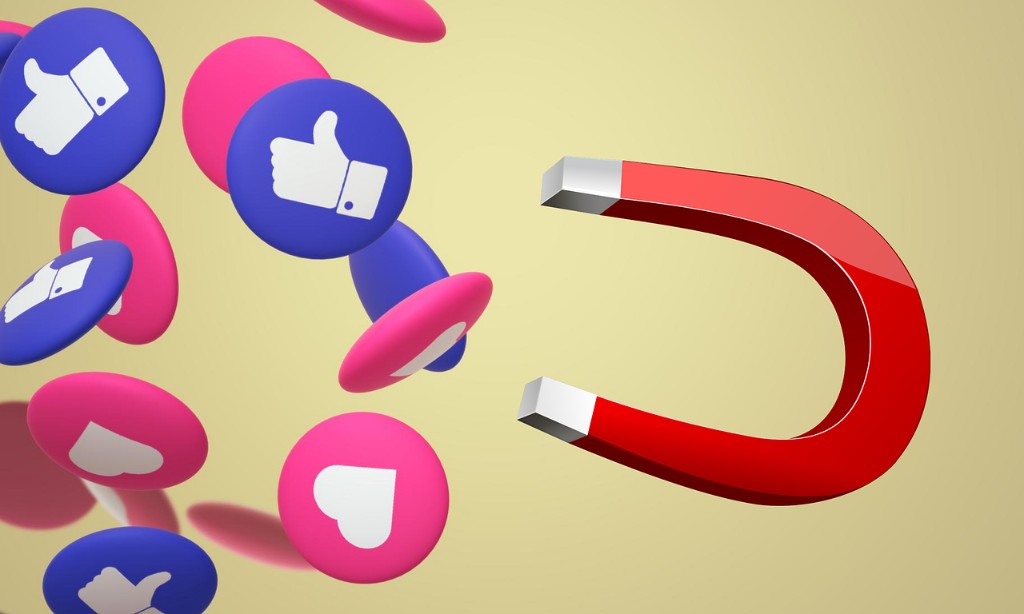
Nevertheless, social media has turned many teenagers' sense of self-worth into the number of likes, comments, or shares they gain. Visual and audio notifications are implemented into these apps to constantly remind you about the online feedback you receive. When someone frequently looks to social media for approval to boost their mood, they can begin to measure their self-worth based on the opinions of others rather than internal values.
Furthermore, social media platforms are specifically designed to keep you online as long as possible by activating dopamine cycles in the brain. Because social media acts as an unlimited flow of content and entertainment, it can create repeated cycles of reward and anticipation the more time you spend. After repeated exposure, the cycle can become difficult to break, creating what researchers describe as “short-term dopamine-driven feedback loops” that can lure users into “coming back for more” (Fernandez, 2022).
Alarmingly, this can be dangerous for one’s mental health, as it can contribute to fragile self-worth and an unhealthy need for quick bursts of pleasure. This loop can compel teenagers to continue posting just to feel adequate and okay, further fueling harmful validation-seeking behaviors.
Inevitably, when the validation disappears or a post doesn't get the expected amount of engagement, it can be perceived as a personal failure. This negative perception can have severe emotional consequences; the TCNY Care Team (2026) explains that a “lack of validation or negative interactions can cause emotional crashes, increasing feelings of anxiety and low self-esteem.”
As a result, rather than the source of their confidence being built on how they view themselves, many teenagers may question and criticize their own worth based on factors they can't control. Over time, their self-esteem becomes reliant on external validation, allowing social media to dictate how they feel about themselves even beyond the screen.
Taking Back Control
How does someone know that they are currently living their best life? For many, it's making sure that whatever action they take is approved and well received by others.
Unfortunately, this is like drinking saltwater when you are thirsty. It gives you a brief sense of relief only to leave you emptier and thirstier than before.
To truly live your best life, you first must know who you are. Ask yourself: what makes you happy? What beliefs do you stand for? Who are you when no one is watching? When you answer those questions for yourself, you get a sense of who you really are without external validation and pressure being a factor. True peace only comes from internal validation, which is approving yourself based on your own values, actions, and self-acceptance.
Social media has made many of us believe we should be measuring our lives based on the curated digital highlights of others. But the truth is that, instead, we need to be measuring our lives based on our own growth, experiences, values, and goals.
Your life suddenly does not become more valuable if more people view or approve of it. What gives your life value is the person you’re becoming for yourself, the relationships you have, the experiences you create, and the dreams you work toward.
But this does not mean that social media is inherently harmful. The benefits of having instant communication with our friends and families along with their life updates should be welcomed and enjoyed. The goal is not to eliminate social media from our lives but rather to stop living the life that others want you to live.
At the end of the day, social media is meant to serve as a means of communication and entertainment, not the definition of who you are.
You are not the number of likes you receive. You are not the number of followers you have. You are not the number of views you get.
And most importantly, you are not your digital persona.
You are your values. You are your beliefs. You are your work ethic. You are your ambitions.
You are the people you hold dearest. You are what happens when no one around you is looking.
References
- American Psychological Association. (2024, April 1). By the numbers: Teens are spending nearly 5 hours daily on social media. Here are the mental health outcomes. Monitor on Psychology, 55(3).
- Colak, M., Sireli Bingol, O., & Dayi, A. (2023). Self-esteem and social media addiction level in adolescents: The mediating role of body image. Indian Journal of Psychiatry, 65(5), 595–600.
- Cybersmile Foundation. (2023, June 16). Exploring the impact of social comparisons on Gen Z.
- Fernandez, V. (2022, August 20). Social media, dopamine, and stress: Converging pathways. Dartmouth Undergraduate Journal of Science.
- TCNY Care Team. (2026, March 10). How social media impacts anxiety, depression and self esteem.